

Starting Running Again This Spring? Avoid These 4 Common Running Mistakes
As the weather warms up and the days get longer, many people find themselves lacing up their running shoes again. Whether you’re returning after a winter break, training for an upcoming event, or simply looking to improve your fitness, spring is one of the most popular times to start running again.
Unfortunately, it’s also one of the most common times for running injuries to appear.
At Flex Health Professionals in Mandurah, we regularly see runners who begin with great motivation but accidentally increase their training too quickly. The result is often Achilles pain, shin splints, runner’s knee, calf strains, or ongoing niggles that interrupt progress.
The good news is that many of these injuries are preventable. By avoiding a few common mistakes, you can improve your chances of staying healthy and running consistently throughout the season.

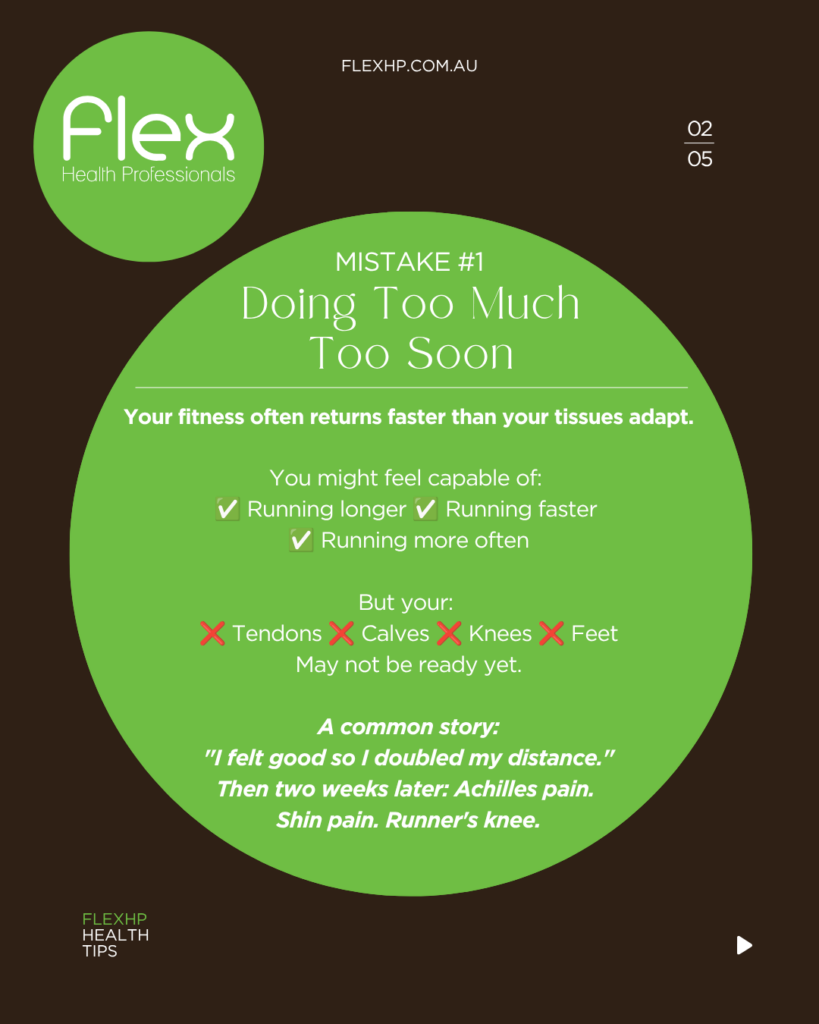

1. Doing Too Much Too Soon
Perhaps the biggest mistake runners make when returning to training is progressing faster than their bodies can adapt.
After a period away from running, your cardiovascular fitness often returns relatively quickly. However, your tendons, muscles, joints, and bones usually require more time to adjust to increased training loads.
Many runners fall into the same pattern. The first run feels surprisingly easy, so they increase their distance, add extra sessions, or push the pace harder than planned. For a week or two everything seems fine, but discomfort gradually starts to develop.
Common symptoms include:
- Achilles tendon pain
- Shin soreness
- Knee pain
- Tight calves
- Foot discomfort
A gradual increase in training volume gives your tissues time to adapt and significantly reduces the risk of overload injuries.
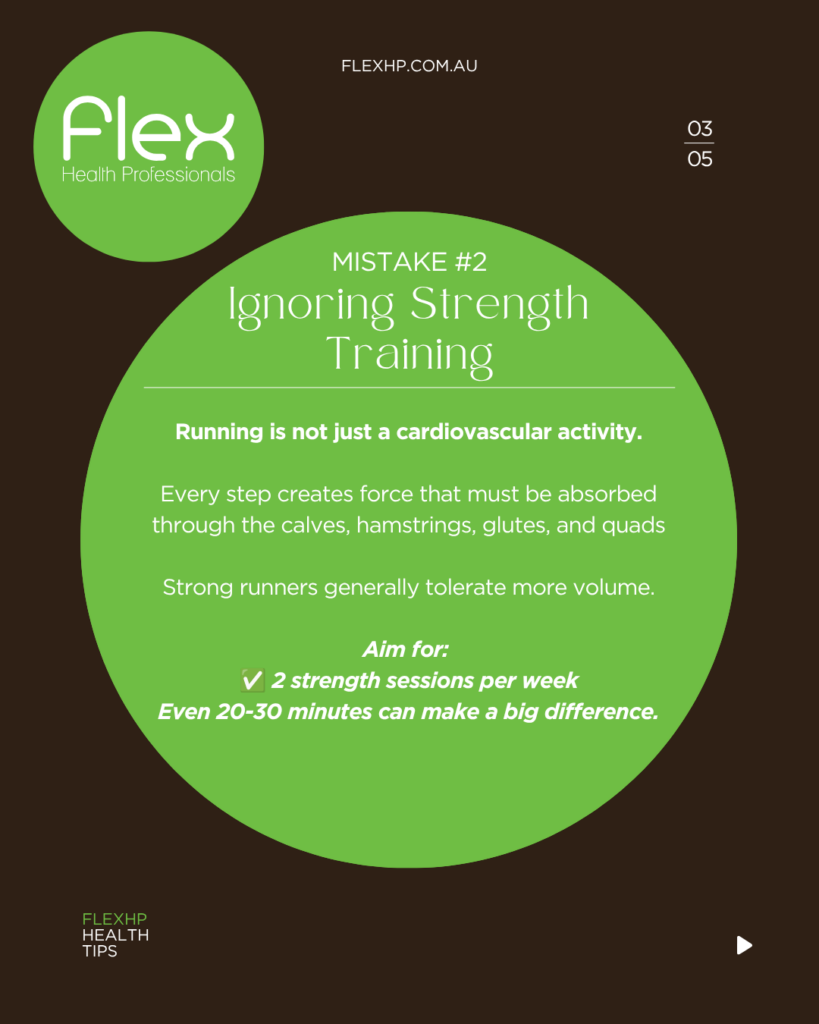
2. Skipping Strength Training
Running is often viewed as a cardiovascular exercise, but every step places considerable force through the body.
Your calves, hamstrings, glutes, quadriceps, feet, and core all contribute to controlling and absorbing these loads. If these structures lack strength, your ability to tolerate running volume can be reduced.
Research consistently shows that strength training can help runners improve resilience, performance, and injury tolerance.
The good news is that you don’t need to spend hours in the gym. For many recreational runners, two strength sessions per week lasting 20 to 30 minutes can make a meaningful difference.
Prioritising exercises that target the calves, glutes, hamstrings, and trunk can help support your running and reduce the likelihood of common overuse injuries.
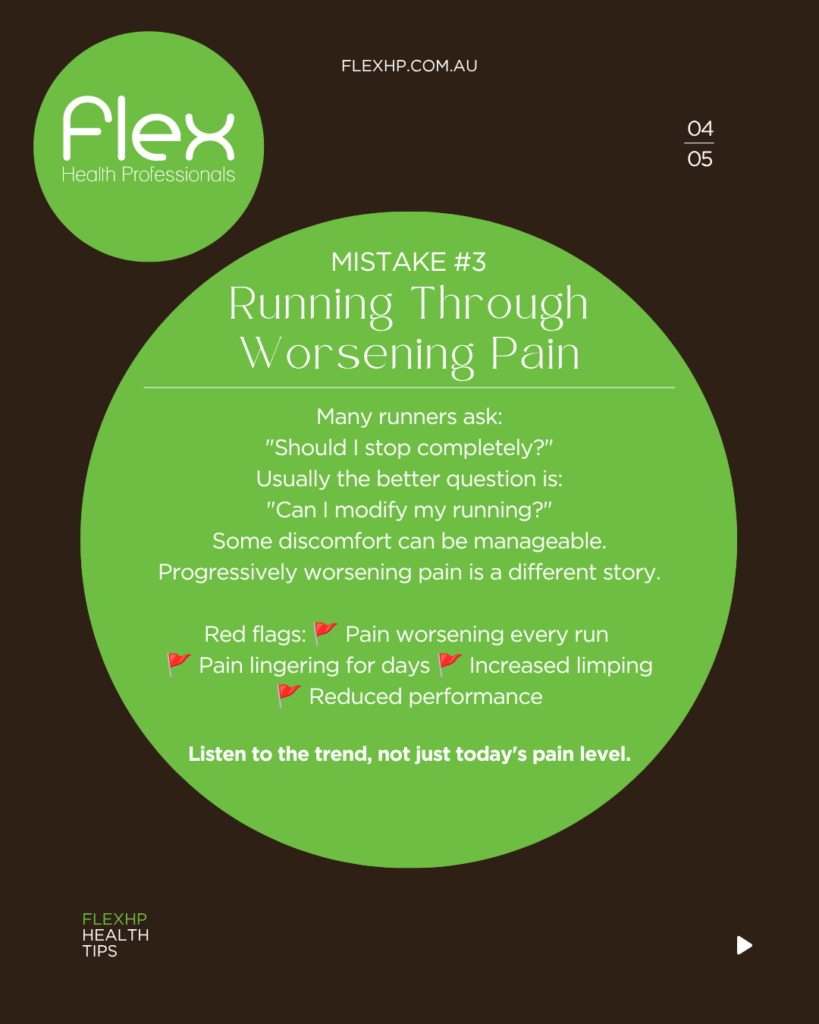
3. Running Through Worsening Pain
One of the most common questions runners ask is:
“Should I stop running if something hurts?”
The answer is rarely a simple yes or no.
In many situations, modifying your training is more appropriate than stopping completely. However, there is an important difference between manageable discomfort and progressively worsening symptoms.
Warning signs that should not be ignored include:
- Pain that increases during each run
- Symptoms that persist for several days after exercise
- A noticeable limp
- Reduced running performance
- Needing longer recovery between sessions
Instead of focusing on how a sore area feels today, pay attention to the overall trend. Symptoms that steadily worsen over time often require further assessment and management.
Addressing small issues early can often prevent them from becoming long-term injuries.
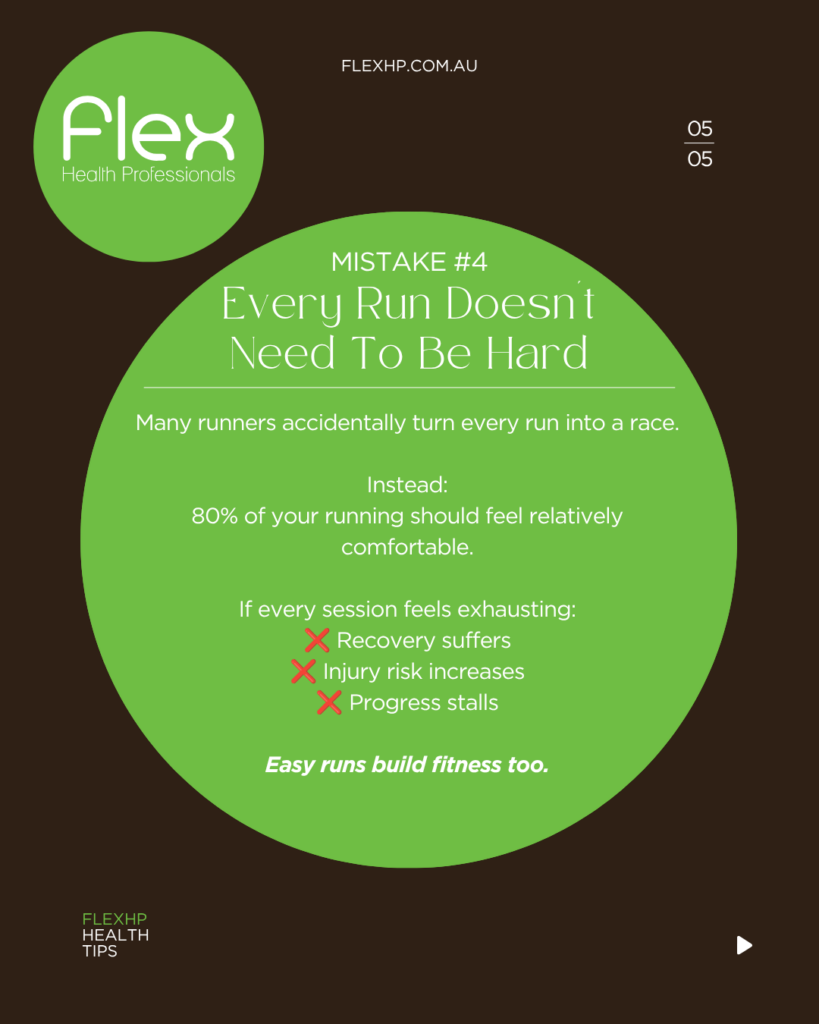
4. Making Every Run Hard
Many runners unintentionally turn every run into a high-intensity workout.
While challenging sessions play an important role in fitness development, constantly pushing hard can increase injury risk and limit recovery.
A common principle used in endurance training is that most running should feel relatively comfortable. Easy-paced running helps develop aerobic fitness, promotes recovery, and allows runners to accumulate training volume without excessive stress.
When every run feels exhausting:
- Recovery can be compromised
- Fatigue builds more quickly
- Injury risk increases
- Long-term progress often slows
Remember that easy runs still provide significant fitness benefits and are a crucial component of a well-balanced training plan.
Recovery Is Part of Training
Many runners focus heavily on kilometres completed while underestimating the importance of recovery.
Your body adapts to training during recovery, not during the workout itself.
Simple factors all contribute together for recovery and performance, such as:
- Quality sleep
- Adequate hydration
- Good nutrition
- Regular walking
- Appropriate strength training
Neglecting these fundamentals can make it more difficult for your body to adapt to increasing training loads.
Stay Running for the Long Term
Starting a new running block is exciting, but successful running isn’t about what you achieve in the first week. It’s about maintaining consistency over the months that follow.
By increasing your training gradually, incorporating strength work, responding appropriately to pain, and allowing adequate recovery, you’ll place yourself in a much stronger position to stay injury-free.
If you’re dealing with persistent Achilles pain, runner’s knee, calf strains, shin soreness, or back pain while running, our team at Flex Health Professionals can help identify contributing factors and develop a plan that keeps you moving.
Need Help With a Running Injury?
Whether you’re just getting back into running or preparing for your next event, our team can assess your symptoms, guide your recovery, and help you return to training with confidence.
Book an appointment with Flex Health Professionals in Mandurah today and keep your running goals on track.